For refineries, gas plants, chemical facilities, and heavy industrial processing sites, the riser in a flare system is one of the most critical components for ensuring safety and environmental protection. It is an essential element that channels waste gases to a safe elevation for combustion.

Definition
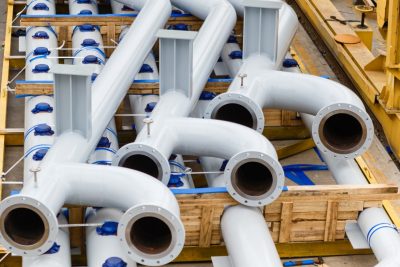
In a flare system, the riser is a vertical pipe that transports gas from the lower piping network (flare header, sub-header) up to the flare tip where combustion occurs. Simply put, it is the vertical gas conduit connecting the gas collection system to the flare tip where the flame is burned.
Functions and Purpose
1. Conveying gases from overpressure systems to the flare tip
The primary function is to carry waste or emergency relief gases from the KO drum or flare header to the flare tip. During overpressure events, emergency venting, or operational gas releases, the riser ensures the gas reaches the correct elevation without leakage.
When the gas burns, it generates extremely high temperatures and intense radiant heat. This part provides the necessary height between the combustion point and production or residential areas. This is a crucial factor in radiation heat calculations and safety distance design for flare systems.

2. Withstanding thermal and mechanical loads
A riser must endure:
-
High temperatures from combustion
-
Low internal pressure
-
Corrosive gas components (H₂S, CO₂, water vapor, hydrocarbons)
-
Wind loads and vibration, especially on offshore platforms
Therefore, these are typically made from heat-resistant, corrosion-resistant alloy steel, sometimes with insulation or protective cladding depending on the design.
3. Providing an unobstructed pathway to the flare tip
The riser is considered the final segment in the flare gas piping network. Its integrity ensures:
Routine inspection and maintenance are mandatory in industrial plants.
Difference Between a Riser and a Flare Stack
This is a common point of confusion for new engineers or those unfamiliar with flare systems.
|
Riser |
Flare Stack |
| Function |
A vertical gas conduit that delivers vented gas to the flare tip for combustion. |
A tall steel structure designed to elevate the riser and flare tip to a safe height. |
| Structure |
A low-pressure pipe, usually welded or bolted to the flare stack structure. |
A load-bearing steel tower that supports the riser, flare tip, control piping, and auxiliary systems.
|
| Position in the system |
Runs inside or alongside the flare stack. |
Forms the external structural support around the riser. |
| Design considerations |
Focuses on gas flow, gas properties, corrosion, and pressure. |
Focuses on structural loads, wind forces, seismic loads, vibration, and thermal radiation safety. |

Role in Operational Safety
The riser directly affects combustion performance and the overall safety of the flare system. It plays a critical role in:
-
Ensuring complete gas combustion
-
Preventing flashback
-
Maintaining flame stability
-
Optimizing heat dispersion and minimizing radiation impact on nearby structures
-
Supporting emissions control and environmental compliance
Even minor defects can lead to gas leaks, reduced combustion efficiency, and serious safety risks.
In a flare system, it is an indispensable component responsible for transporting gas and elevating the flame to a safe burning height. Although often confused with the flare stack, the two have very different functions, structures, and design purposes. This helps engineers design, operate, and maintain flare systems more effectively, ensuring plant safety and environmental protection.