4 Mechanical Design Standards: Safety and Optimal Efficiency
22/08/2025
In mechanical design, adherence to standards is not merely a requirement but a dedication to quality and safety. This is why VHE consistently prioritizes the application and compliance with international standards as the foundation of every project. This article will examine the prominent design standards and demonstrate how we implement them to deliver the most effective technical solutions to our customers.
International standards serve as a framework for engineers, assisting them in ensuring that products are designed and produced in a safe, efficient, and globally recognized manner. Among the most notable of those in the field are:
1. ASME (American Society of Mechanical Engineers)
ASME is recognized as one of the most esteemed standards globally, particularly serving as the key for pressure vessel design. VHE consistently adheres to ASME regulations when calculating shell thickness, materials, and other safety factors. Consequently, tanks designed by VHE not only fulfill technical specifications but also guarantee exceptional durability and safety, even in challenging working conditions.
Additionally, ASME outlines the requirements for the design of piping systems in chemical plants and refineries. This implementation enables VHE to precisely calculate stresses, choose appropriate materials, and guarantee the highest quality welds, thus reducing the risk of leaks and operational failures.
2. AISC (American Institute of Steel Construction)
AISC refers to the American Institute of Steel Construction, a non-profit technical and trade organization engaged in the application of structural steel in construction throughout the United States.
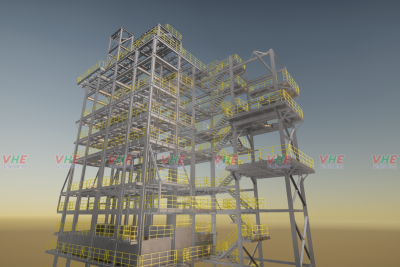
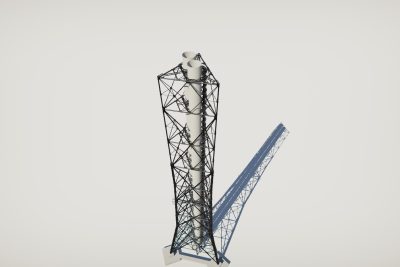
At VHE, the implementation of AISC (American Institute of Steel Construction) standards for steel structures plays a crucial role in enhancing quality and competitiveness. The engineering team at VHE adeptly employs both LRFD (Load and Resistance Factor Design) and ASD (Allowable Strength Design) methods to meet the unique requirements of each project.
Furthermore, AISC compliance allows VHE to fully utilize modern design software like SAP2000 and Tekla Structures, which accelerates the workflow and improves accuracy. This not only boosts technical credibility but also serves as a significant advantage, particularly when engaging in large projects or meeting demands from the international market.
3. API (American Petroleum Institute)
API represents a crucial framework within the oil and gas sector, where the demands for safety and reliability consistently remain at the highest standards.
VHE implements API in the design of welded steel petroleum tanks. API outlines specifications regarding materials, welding techniques, and structural calculations, enabling VHE to guarantee that tanks possess strong resistance to environmental conditions and operational pressure, thereby enhancing performance and longevity.
Additionally, API has established a set of guidelines for inspection and maintenance that assist VHE in not only designing but also delivering comprehensive support services. The team of engineers at VHE can guide customers on periodic inspection plans, aiding in the extension of equipment lifespan and ensuring safety during operation.
3. ISO (International Organization for Standardization)
In addition to product technical standards, VHE also develops ISO operating procedures to enhance efficiency.
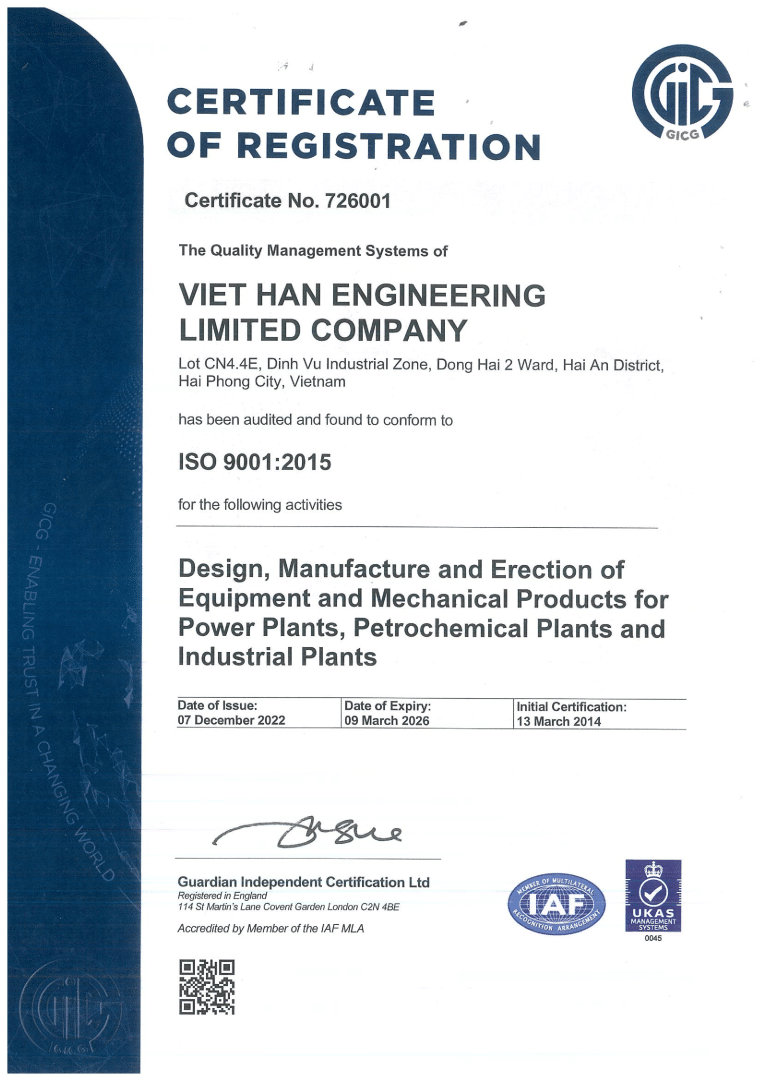
ISO 9001: VHE implements the ISO 9001 quality management system, guaranteeing that every aspect of the workflow—from receiving requirements to designing, simulating, and testing—adheres to a rigorous and professional process.
VHE and the Critical Significance of Standards Compliance
Adhering to design standards is not merely a legal obligation; it also serves as a significant competitive edge. For VHE, this approach showcases its expertise and dedication.
1. Complete Safety Assurance
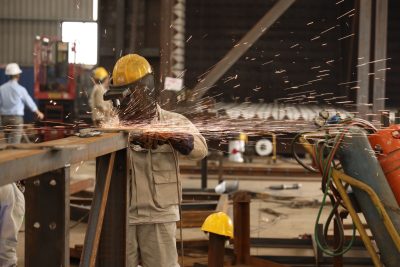
With considerable expertise in the design of pressure equipment and intricate systems, VHE recognizes that safety is the foremost priority. Each drawing and calculation must adhere to the most stringent international standards to mitigate risks and safeguard the well-being of individuals and the assets of clients. Adhering to standards encompasses not only regulatory compliance but also the professional ethics upheld by every VHE engineer.
Implementation of ISO 9001:2015 at VHE Company
2. Enhance Efficiency and Lower Expenses
By adhering to international standards, VHE engineers can select the most efficient materials and design options from the outset. This approach aids in reducing material costs, construction time, and future maintenance expenses. VHE products not only fulfill technical specifications but are also economically optimized, delivering sustainable value to customers.
3. Improve Reputation and Broaden Market
Designing in accordance with ASME, API, …etc has enabled VHE to establish strong trust with both domestic and international partners. VHE’s projects consistently receive high praise for their quality and reliability. This not only reinforces VHE’s standing in the domestic market but also creates opportunities for collaboration with global enterprises, showcasing its competitiveness on an international scale.
Conclude
Adherence to international engineering design standards is fundamental to VHE’s operational philosophy. This commitment ensures quality, safety, and optimal efficiency in every project. By implementing standards such as ASME, API, and ISO, VHE not only produces high-quality products but also provides complete peace of mind to its customers. This strong foundation enables VHE to persist in its development, innovation, and to reinforce its status as a leading enterprise in the mechanical design sector.
Inventor is a powerful 3D design (CAD) tool widely used in various mechanical engineering fields. With its detailed modeling, thorough analysis, and automation capabilities, Inventor offers numerous benefits to...
Steel has historically symbolized the evolution of the modern construction sector. Its exceptional characteristics such as durability, high load-bearing capacity, and flexibility play a vital role in constructing both...
One crucial element in enhancing the performance and ensuring the safety of industrial machinery systems is the piping system, particularly the inlet duct. In this article, we will examine...
Flare system stands as an exceptional solution for the treatment of exhaust gas, ensuring safe combustion while playing a vital role in safeguarding our environment within the manufacturing sector....
In intensive industrial production, particularly within the steel structure and high-tech fabrication sectors, quality documentation transcends a mere compilation of requisite documents for procedural completion. At VHE, it constitutes...
Steel structures, the robust backbone of countless contemporary edifices, are vital in safeguarding the safety and sustainability of our built environment. This article will guide you in answering that...
Reducing risks in manufacturing management is crucial for fostering sustainable business growth. In the manufacturing sector, various threats can impact business processes and employees. VHE focuses on enhancing safety...
At VHE, our commitment to quality begins long before a product is finished. While our QA/QC department conducts thorough inspections of every final product, our core strategy is a...
Impact test, especially the Charpy V-notch test, is a commonly employed technique for assessing a crucial mechanical property of materials: their capacity to absorb energy during impact, referred to...
QA/QC System (Quality Assurance/Quality Control) is pivotal in safeguarding product quality and enhancing customer satisfaction. This system serves to boost production efficiency while guaranteeing adherence to global quality benchmarks....