Hydro Test for Flare Stack | Ensuring Safety & Integrity
10/10/2025
Flare stacks are specialized systems operating in harsh, continuous industrial environments. Before being put into service, they must undergo strict inspections to verify tightness and pressure resistance. Among various testing methods, the Hydro Test (Hydrostatic Test) plays a critical role in confirming the structural integrity and fabrication quality of the flare stack.
This essential step helps prevent serious incidents during operation and ensures that the entire system functions safely and reliably.
Challenges in Conducting Hydro Tests for Flare Stacks
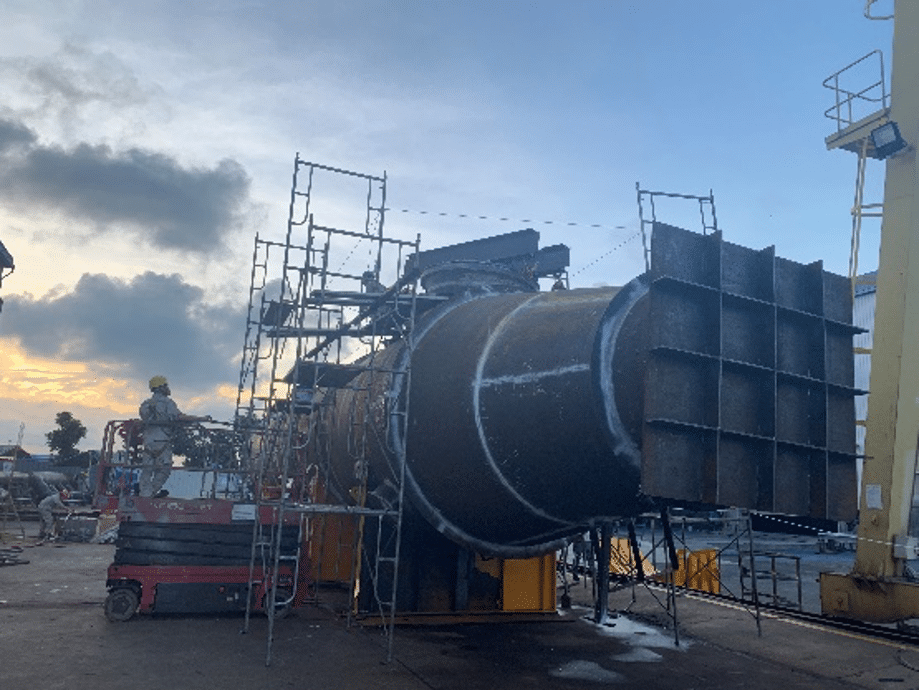
Unlike typical pressure vessels or pipelines, a flare stack features a long, slender body with thin walls that can easily deform under stress. The structure is often tall and integrated with several auxiliary components, making full-scale pressure testing highly complex.
Therefore, the hydrostatic test cannot be performed mechanically based solely on ASME standards. It requires thoughtful design and engineering adjustments to anticipate potential issues during the testing process and ensure accurate results.
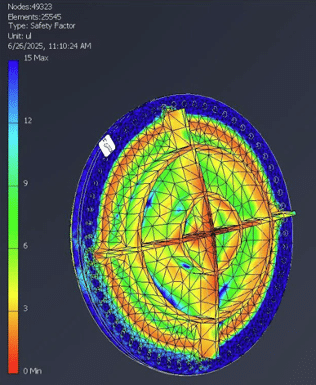
Using FEA to design a temporary flange
Hydro Test Procedure for Flare Stack
To achieve reliable results, the hydro test for a flare stack typically involves the following key steps:
Initial Inspection: Examine weld seams, threaded connections, and ensure all measuring instruments used for pressure testing are calibrated and certified.
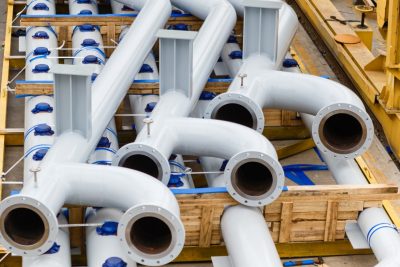
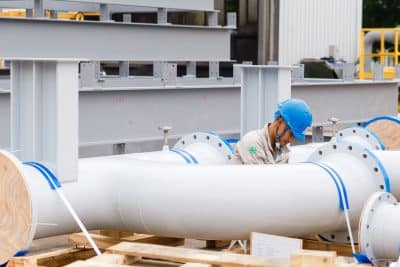
Setup and Sealing: Lay each section of the stack horizontally on secure supports, seal both ends, fill the interior with clean water, and remove all trapped air. The water source must meet quality requirements, keeping chloride and iodide concentrations within acceptable limits to avoid corrosion.
Pressurization: Use a pressure pump to gradually raise the internal pressure to the specified test level.
Pressure Holding: Maintain the pressure for at least 30 minutes. During this period, engineers inspect all welds, flanges, and joints while documenting findings with detailed reports and photographic evidence.
Draining and Drying: After testing, drain all the water completely and dry the equipment thoroughly. This step is crucial, especially for carbon steel structures, as residual moisture can lead to internal corrosion over time.
Risks of Improper Hydro Testing
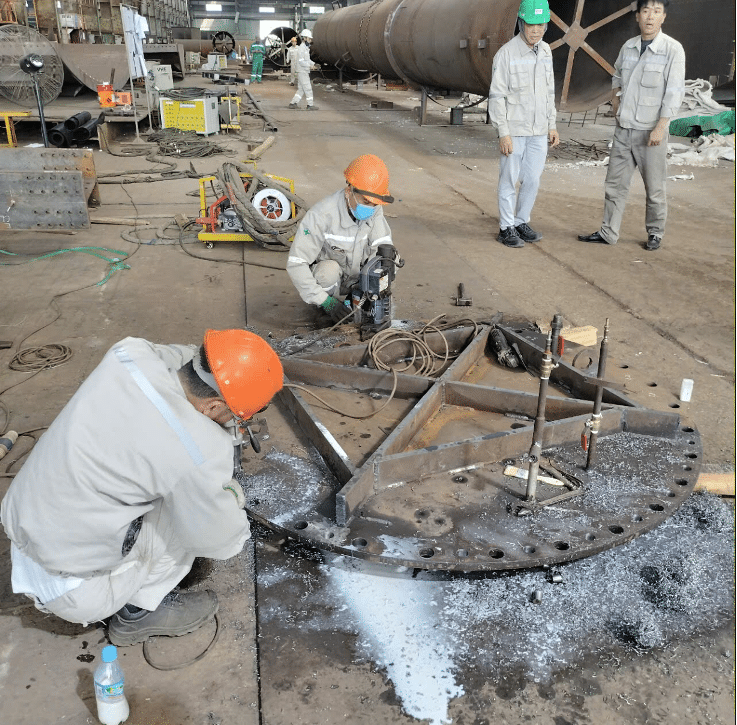
Fabricating a temporary flange for testing purposes.
If the hydro test is not carried out correctly, the consequences can be severe. In some cases, flare stacks have warped or cracked due to pressures exceeding design limits. In others, internal corrosion developed within months of operation because water was not fully drained or drying was insufficient. Such failures not only result in significant economic losses but also pose serious safety risks to the entire plant system.
Design and Construction Considerations
To ensure optimal results, hydro testing must be planned from the design stage of the flare stack. Material selection, weld design, placement of pressure gauges, drain ports, and supports must all be carefully engineered—not only for long-term operation but also to facilitate safe and efficient hydro testing. When design and construction work hand in hand, the hydro test process becomes smoother, minimizes risks, and enhances the long-term durability of the equipment.
Conclusion
The Hydro Test for Flare Stack is a mandatory inspection step to ensure safety and quality before the system goes into operation.
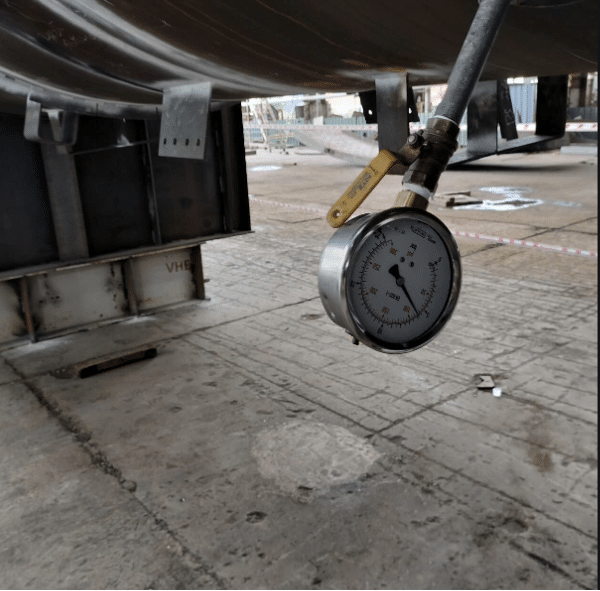
Pressure gauge
Given the complex structure and harsh operating conditions of flare stacks, the hydro test must be carefully planned, executed according to proper procedures, and integrated right from the design stage. When performed correctly, the hydro test enhances equipment durability, minimizes potential failures, and ensures long-term stability and safety for the entire industrial system throughout its operational lifespan.
Transporting heavy industrial goods presents numerous potential challenges, including risks associated with unforeseen natural disasters. This is why VHE is consistently prepared to implement thorough disaster management plans, facilitating...
Join Viet Han Engineering to discover the diverse world of industrial piping technical drawings: P&ID (Piping & Instrumentation Diagram), Piping Isometric (3D Implementation Drawing), and Spool (Prefabricated Pipe Sections)....
In the context of rising fuel costs and the global imperative to reduce carbon emissions, industrial enterprises are shifting toward more energy-efficient solutions. One of the leading technologies today...
Steel structures play a crucial role in modern construction, offering strength, flexibility, and superior load-bearing capacity for buildings. However, steel is also susceptible to environmental factors, leading to corrosion...
Material waste in production presents a significant challenge for many businesses. It not only elevates production costs and diminishes profits but also impacts product quality and the competitive edge...
VHE takes pride in leading the way in applying a variety of international standards throughout the design process. We adhere to a range of industry standards, from the broadest...
In Flare Stack systems, one of the most critical components ensuring operational safety and efficiency is the Liquid Seal Drum. This specialized device is designed with a specific level...
Labor safety stands as the foremost priority for every manufacturing enterprise, including VHE. In an era of rapidly advancing technology and heightened demands for product quality, creating a secure...
In the manufacturing industry, ensuring progress is not merely a necessity but a pivotal element for the triumph of every project. At Viet Han Engineering, timely delivery not only...
The global electricity market is experiencing significant transformations, necessitating that modern power plants have adaptable operating solutions and attain optimal efficiency to address the growing complexity of the energy...