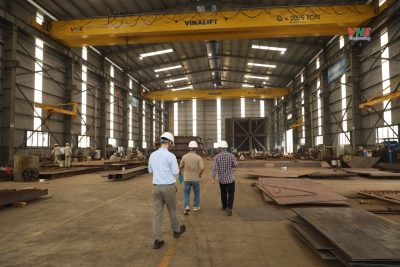
At VHE, our commitment to quality begins long before a product is finished. While our QA/QC department conducts thorough inspections of every final product, our core strategy is a rigorous steel management process implemented from the very beginning. We operate on the principle that the integrity of the finished component is directly tied to the quality of its raw materials. This proactive approach guarantees that each part we machine is derived from a foundation of excellence, systematically eliminating potential risks and defects before they can ever enter the manufacturing cycle.
Prior to making a decision to collaborate, the QA/QC team will perform a thorough evaluation of steel suppliers. This assessment includes reviewing the supplier’s certifications, quality control processes, and past performance records to ensure compliance with industry standards. The team will also consider the supplier’s capacity to meet delivery timelines and their ability to adapt to VHE’s specific requirements.
Certification Verification: We request and confirm international quality certifications, including ISO 9001, CE, or other industry-specific standards. This process guarantees that the supplier maintains a dependable quality management system.
Qualification: VHE performs site visits and evaluations at our partners’ factories to examine their manufacturing processes, technology, and internal quality control capabilities. We choose only those suppliers who can meet the highest technical standards.
By conducting this comprehensive evaluation, VHE aims to establish a reliable partnership that guarantees high-quality steel inputs, contributing to the success of the projects.
Strict Steel Management Process At VHE
Upon arrival at VHE’s workshops, the steel batches will be subjected to a thorough inspection process conducted by the QA/QC department. This step is crucial to guarantee that no defective materials are allowed into the manufacturing process.
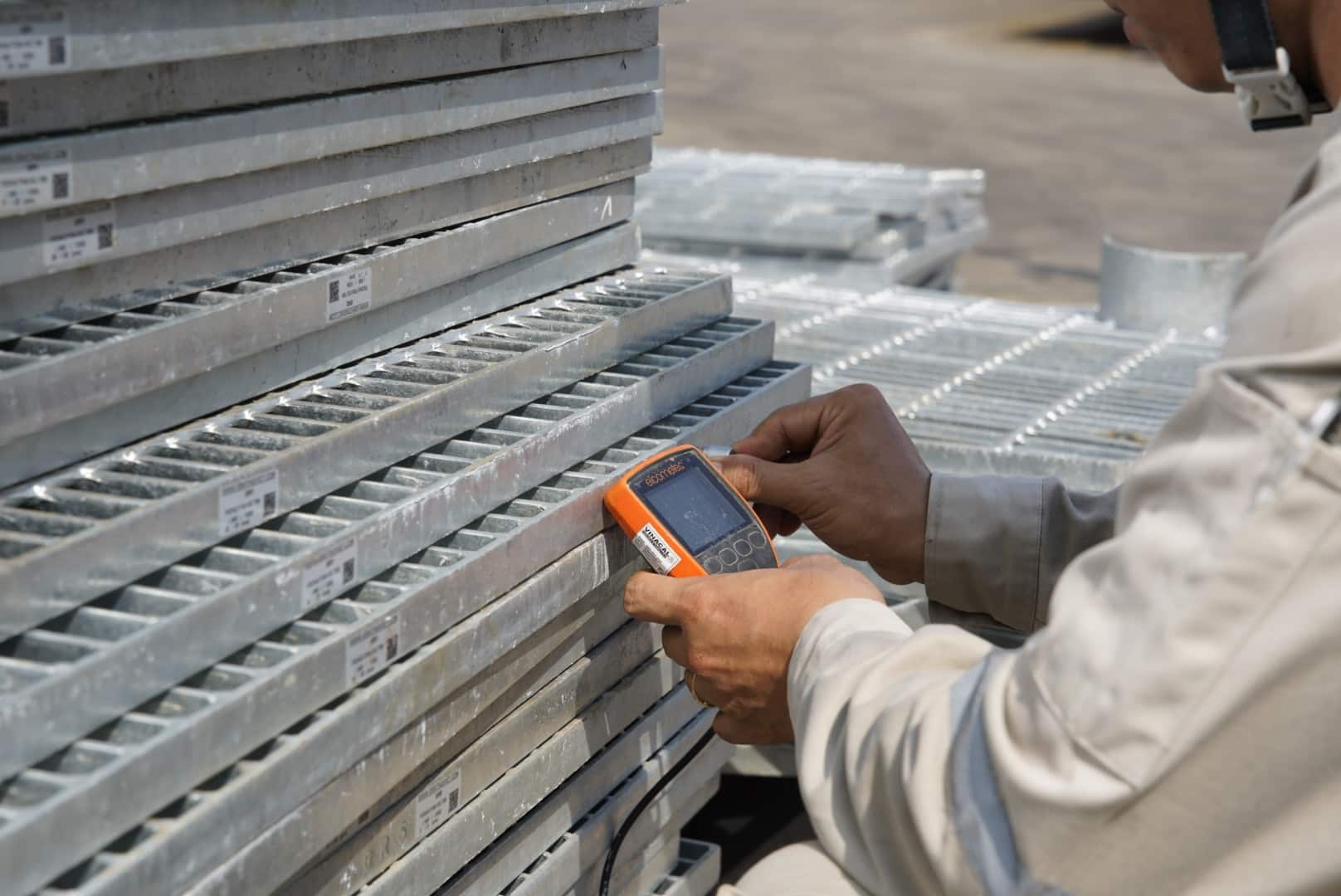
Surface Inspection and Measurement: The team of technicians at VHE will examine the steel surface for defects including cracks, pitting, warping, or indications of corrosion. Additionally, we utilize precision measuring instruments to ensure that the dimensions, thickness, and shape of the material conform to the engineering specifications.
Further examination of the provided composition: This represents the crucial testing phase for steel materials. Our team evaluates the steel constituents to ascertain the precise ratio of elements such as Carbon, Chromium, Manganese, Nickel, and others, ensuring that the material complies with the necessary steel grade standards (e.g., SS400, S45C, inox 304, etc.). Variations in chemical composition can significantly impact the hardness, durability, and corrosion resistance of the final product.
Mechanical assessment: Our QA/QC team performs a comprehensive range of mechanical tests on material samples. We conduct hardness, tensile, and ductility evaluations to ensure the material can withstand the forces and deformations encountered during both the manufacturing process and practical application.
Management and Monitoring
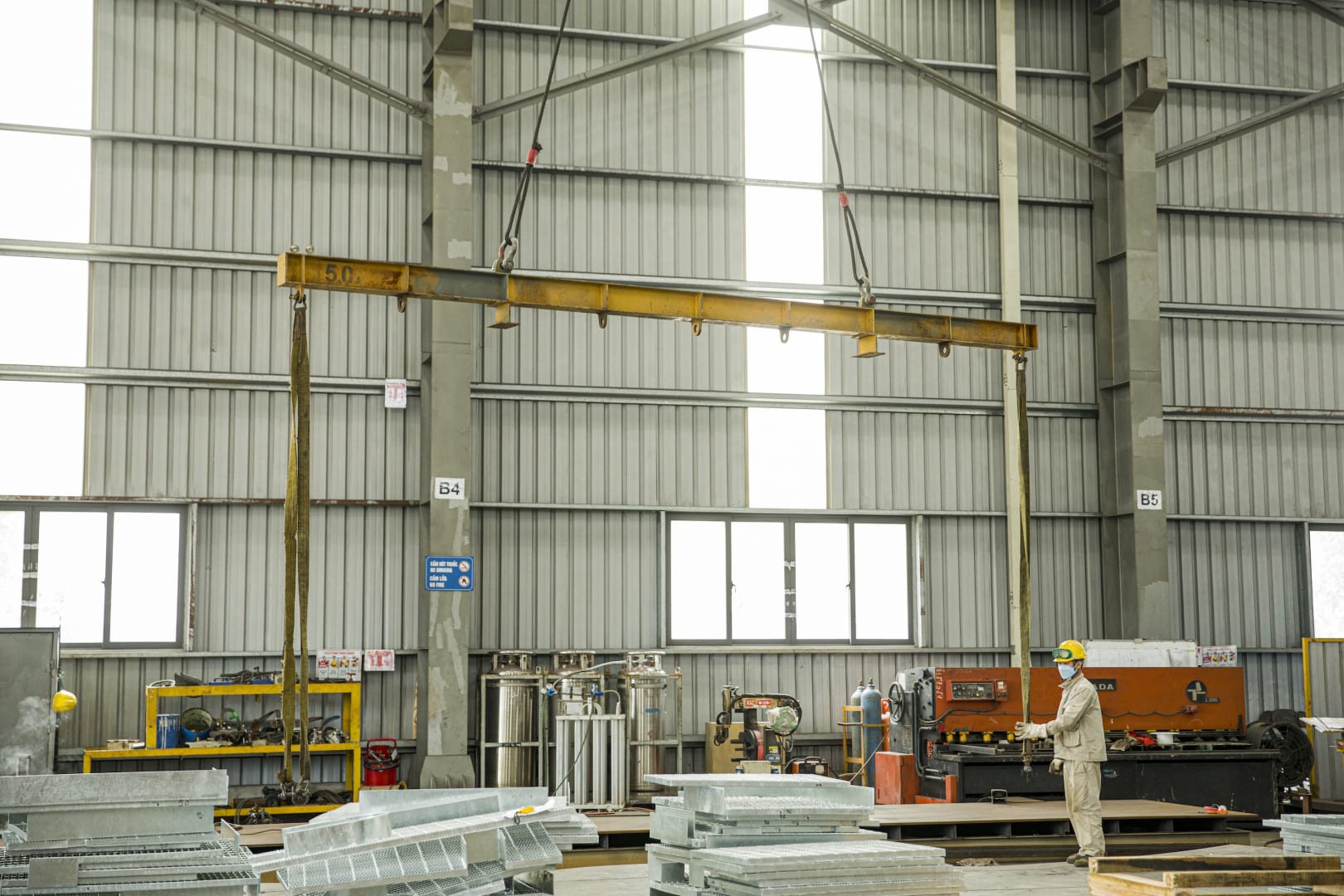
Each imported batch of steel receives a unique code and is meticulously stored. Details regarding the supplier, import date, and quality control results are comprehensively documented.
Sample retention: A small quantity of each steel batch is kept as a reference sample. If any issues occur during production or arise from customer feedback, we can promptly access and retest the original material sample to identify the cause.
Traceability: Our management system enables us to track the origin of each product to a specific batch of steel material. This ensures us to complete accountability for product quality and fosters unwavering trust with customers.
This commitment to material integrity is not just a procedural formality; it’s the foundation of our long-term vision. By using only verified, top-quality steel, we provide sustainable value to our clients. Our products exhibit exceptional durability, reducing the need for costly maintenance and replacements. For critical applications, this meticulous control ensures unparalleled safety and reliable performance under challenging conditions. We believe that guaranteeing the quality of the raw material is the most effective way to eliminate potential risks and ensure the longevity of the final product.
For refineries, gas plants, chemical facilities, and heavy industrial processing sites, the riser in a flare system is one of the most critical components for ensuring safety and environmental...
Inventor is a powerful 3D design (CAD) tool widely used in various mechanical engineering fields. With its detailed modeling, thorough analysis, and automation capabilities, Inventor offers numerous benefits to...
The manufacturing sector has experienced a remarkable transformation in recent years, driven by the extensive integration of modern technology. Transitioning from conventional workshops with manual machinery, the industry is...
The global electricity market is experiencing significant transformations, necessitating that modern power plants have adaptable operating solutions and attain optimal efficiency to address the growing complexity of the energy...
Piping loops, crucial for managing thermal stress resulting from the expansion and contraction of materials due to temperature fluctuations, are constructed in utility piping within flare stack systems. During...
QA/QC System (Quality Assurance/Quality Control) is pivotal in safeguarding product quality and enhancing customer satisfaction. This system serves to boost production efficiency while guaranteeing adherence to global quality benchmarks....
The foundation of a robust supply chain is not solely based on advanced technology or high-quality human resources; it significantly relies on collaboration with reliable suppliers. Selecting the appropriate...
For a unit engaged in manufacturing, the caliber of the team of engineers and craftsmen serves as a strong foundation for delivering exceptional products and services. Consequently, Viet Han...
Flare stacks are specialized systems operating in harsh, continuous industrial environments. Before being put into service, they must undergo strict inspections to verify tightness and pressure resistance. Among various...
In modern industrial systems, controlling noise and optimizing airflow are essential factors that cannot be overlooked. One of the most effective solutions is the use of splitters in inlet...