

Ensuring Progress: The Key to Lasting Success
In the manufacturing industry, ensuring progress is not merely a necessity but a pivotal element for the triumph of every project. At Viet Han Engineering, timely delivery not only...
View moreIn industrial equipment manufacturing, welds play a critical role in connecting components and ensuring the overall strength and durability of a structure. A poor-quality weld can lead to cracking, deformation, leakage, safety hazards, and reduced equipment lifespan. This is why welding inspection is a mandatory step in the QA/QC process at VHE.

Welding inspection is crucial for ensuring equipment safety and preventing serious operational failures during use. It also helps manufacturers comply with international technical standards such as ASME, AWS, and ISO, while reducing long-term costs by detecting and correcting welding defects early—before mass production or final product handover.
A rigorous weld inspection process also demonstrates VHE’s commitment to quality, reinforcing trust and credibility with partners and customers.

Visual Testing is the most basic and mandatory method in any project. QA/QC engineers visually examine the weld using the naked eye or magnifying tools to detect obvious defects such as cracks, porosity, undercut, edge misalignment, or sagging.
Although simple, fast, and cost-effective, VT is highly valuable as the first screening step, helping identify surface flaws before applying more advanced inspection techniques.

Liquid Penetrant Testing uses a specialized penetrant that seeps into fine cracks or surface-breaking defects. A developer is then applied to draw out the penetrant, making hidden flaws clearly visible.
PT is suitable for various materials such as stainless steel, aluminum alloys, and titanium. Its high accuracy makes it an ideal choice for products requiring leak-tightness, including pressure vessels, pipelines, and storage tanks.
For ferromagnetic metals, Magnetic Particle Testing is an effective method to detect surface and near-surface defects. When a magnetic field is applied around the weld, interruptions in the field caused by defects attract magnetic particles, clearly highlighting flaw locations.
MT offers high sensitivity, fast inspection speed, and reasonable cost. It is commonly used for welded steel structures and load-bearing components such as shafts and thick steel plates—areas where safety demands are extremely high.

VHE implements a structured and comprehensive inspection workflow to ensure precision and traceability.
First, engineers select inspection methods suitable for the material properties and technical requirements of each project. Testing is then performed in ascending order, starting with Visual Testing and followed by advanced NDT methods where necessary.
Inspection results are evaluated using internationally recognized standards such as ASME, AWS, and ISO. All data, images, and reports are compiled into a complete QA/QC documentation package, ready for customer review upon project delivery.

Welding inspection is an essential step to ensure quality, durability, and safety in industrial equipment manufacturing. With strict QA/QC controls, advanced inspection methods, and a team of experienced specialists, VHE is committed to delivering products that meet international standards—offering long-lasting performance and absolute safety for customers.

In the manufacturing industry, ensuring progress is not merely a necessity but a pivotal element for the triumph of every project. At Viet Han Engineering, timely delivery not only...
View more
Inventor is a powerful 3D design (CAD) tool widely used in various mechanical engineering fields. With its detailed modeling, thorough analysis, and automation capabilities, Inventor offers numerous benefits to...
View more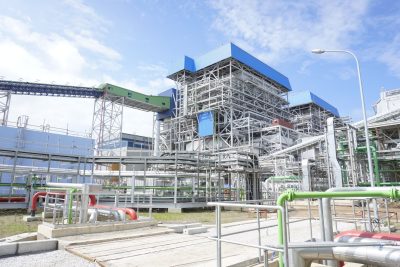
Did you know that 80% of manufacturing costs are contingent upon material selection? This decision not only influences product quality but also directly impacts the supply chain, manufacturing process,...
View more
For a unit engaged in manufacturing, the caliber of the team of engineers and craftsmen serves as a strong foundation for delivering exceptional products and services. Consequently, Viet Han...
View more
In the Gas Turbine system, the Air Inlet Duct serves as a crucial component that directs a consistent intake air flow into the compression chamber. Even minor deviations in...
View more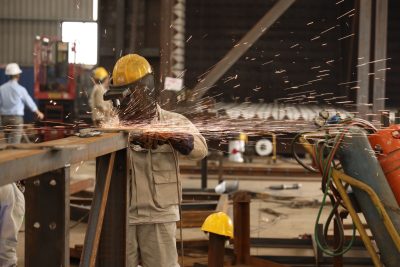
Reducing risks in manufacturing management is crucial for fostering sustainable business growth. In the manufacturing sector, various threats can impact business processes and employees. VHE focuses on enhancing safety...
View more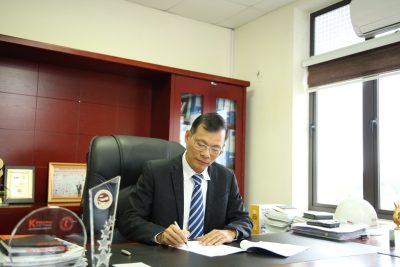
A robust vision is essential for VHE’s continuous development over its 16-year journey. Vision is a critical component not only in business but also a key determinant of success...
View more
Fabrication is an industry of significant importance in various aspects of life. Explore six fundamental methods and their practical applications. I. Definition: The production process involves blending technique with...
View more
The foundation of a robust supply chain is not solely based on advanced technology or high-quality human resources; it significantly relies on collaboration with reliable suppliers. Selecting the appropriate...
View more
ISO 9001 standard has been officially applied into VHE since 2013, including the categories of Design, Manufacture and Erection of Equipment and Mechanical Products for Power Plants, Petrochemical Plants,...
View more
We will contact you upon receipt of the information